This website uses cookies so that we can provide you with the best user experience possible. Cookie information is stored in your browser and performs functions such as recognising you when you return to our website and helping our team to understand which sections of the website you find most interesting and useful.
Search Products

June 4, 2026
Paper Matters: A Strategic Guide to Choosing the Right Paper for Brand and Marketing Materials
Share on


 Paper is often treated as a technical production detail — but in reality, it is a strategic branding decision.
Beyond visual design, paper influences how a brand is perceived, how messages are experienced, and how effectively communication performs. The right choice elevates impact and credibility, while the wrong one can undermine even the strongest creative concept.
As highlighted by industry insights from Two Sides, paper is not just about appearance — it plays a critical role in how printed communications are valued and trusted, particularly in marketing and brand communication.
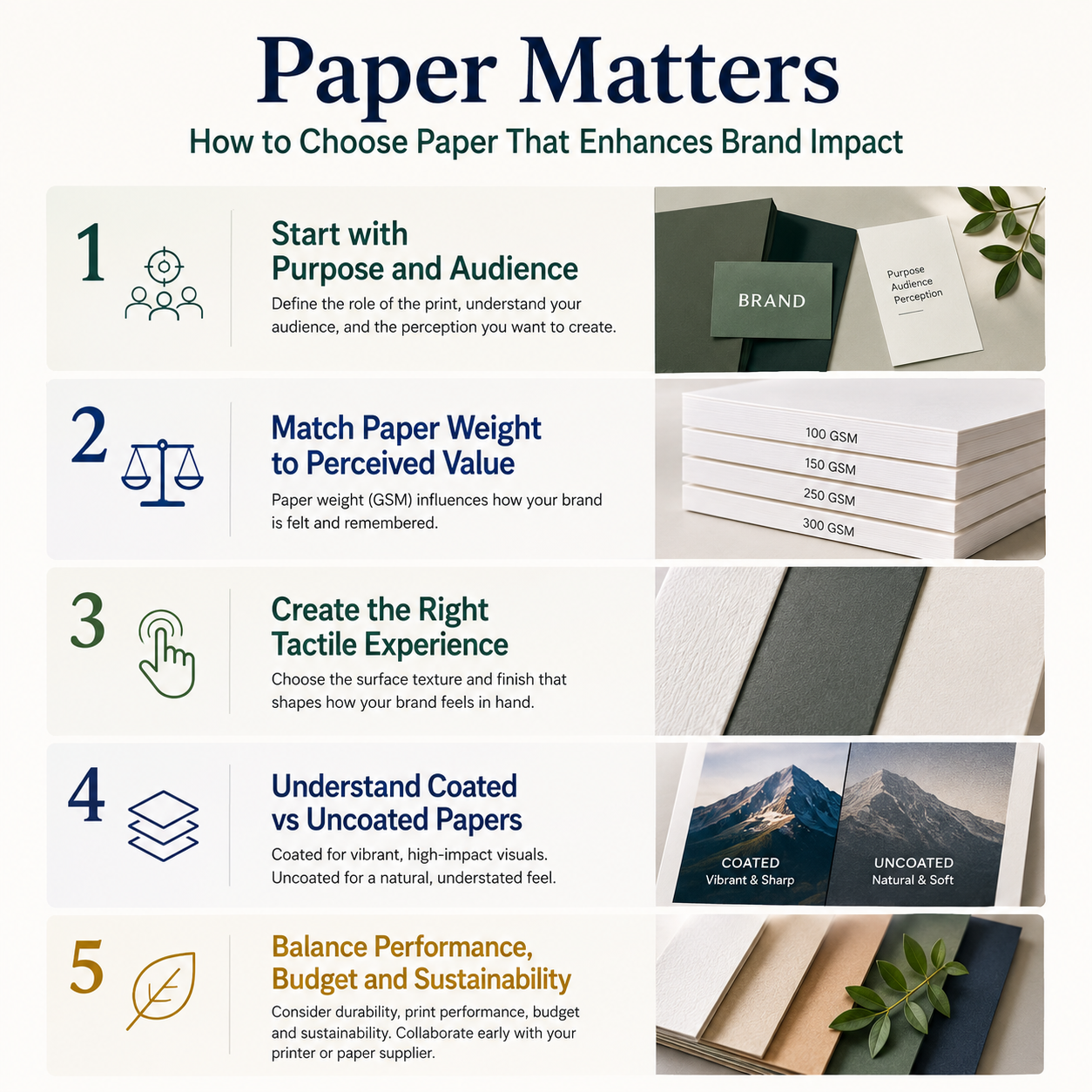
1. Start with Purpose and Audience
Every paper decision should begin with clarity of intent.
- What is the objective — marketing, packaging, or corporate communication?
- Who is the audience — customers, partners, or internal stakeholders?
- What perception should it create — premium, sustainable, efficient, or functional?
Paper is not just a medium — it is part of the message. It shapes first impressions and reinforces brand positioning from the very first touch.
2. Match Paper Weight to Perceived Value
Paper weight (GSM) directly impacts how a brand is perceived.
Heavier stocks communicate quality, durability, and credibility, while lighter papers support cost-efficiency and high-volume applications.
Typical guide:
• 70–120 GSM: Everyday documents and internal use
• 120–170 GSM: Brochures, flyers, inserts
• 200–350 GSM: Business cards, covers, premium marketing materials
Weight is more than a physical attribute — it is a signal of value and intent.
3. Create the Right Tactile Experience
Paper is a sensory experience, not just a visual one.
- Gloss: High colour vibrancy and sharp imagery — ideal for campaigns and product marketing
- Matt: Clean, refined, and highly readable — suited for corporate communication
- Uncoated / Textured: Natural, tactile, and authentic — often used for premium or sustainability-led branding
Texture and finish contribute to how a brand feels emotionally, influencing perception beyond design alone.
4. Understand Coated vs Uncoated Papers
Choosing between coated and uncoated paper is a key strategic decision.
- Coated papers enhance colour, sharpness, and image clarity. Ink sits on the surface, delivering vibrant, high-impact visuals.
- Uncoated papers absorb ink into the fibers, creating a softer, more natural and understated finish.
This choice reflects brand tone — bold and dynamic versus subtle and authentic — and should align with the overall communication strategy.
5. Balance Performance, Budget and Sustainability
Effective paper selection requires balancing multiple factors:
- Functional performance (durability, handling, print compatibility)
- Budget considerations and production efficiency
- Sustainability goals, including recycled or FSC-certified materials
Equally important is early collaboration with printers and paper suppliers. Engaging them at the planning stage helps ensure the selected paper performs well during printing and finishing, avoids production issues, and optimises overall cost.
Conclusion: Paper as a Strategic Brand Asset
Paper is more than a substrate — it is a brand touchpoint.
It influences how messages are seen, felt, and remembered. The right choice enhances design, strengthens perception, supports sustainability goals, and improves communication effectiveness.
In today’s competitive landscape, paper should not be an afterthought in production — it should be a deliberate, strategic decision that elevates the entire brand experience.
Source:
- Two Sides UK – Fresh Thinking: Paper Ideas (2026)
Fresh Thinking Paper Ideas – Two Sides UK - Coated vs Uncoated Paper Explained (QinPrinting)
- Uncoated Paper Properties & Uses (QinPrinting)
- Paper Weight (GSM) and Print Impact Guide (ExpressPrint SG)
Featured Articles