This website uses cookies so that we can provide you with the best user experience possible. Cookie information is stored in your browser and performs functions such as recognising you when you return to our website and helping our team to understand which sections of the website you find most interesting and useful.
Search Products

August 4, 2026
Why Designers, Printers, and End Users Still Care About Paper
Share on


In today’s fast-paced, digitally driven business environment, print is often underestimated. Yet for industry professionals, paper is far more than a passive medium—it is a strategic asset that directly influences product integrity, brand positioning, and operational efficiency.
For designers, printers, and end users alike, the choice of substrate is not a minor detail. It is a critical decision that impacts perception, performance, and ultimately, return on investment (ROI).
At OVOL, we see paper not just as a product, but as a solution—one that connects creative vision, production realities, and business outcomes.
In today’s fast-paced, digitally driven business environment, print is often underestimated. Yet for industry professionals, paper is far more than a passive medium—it is a strategic asset that directly influences product integrity, brand positioning, and operational efficiency.
For designers, printers, and end users alike, the choice of substrate is not a minor detail. It is a critical decision that impacts perception, performance, and ultimately, return on investment (ROI).
At OVOL, we see paper not just as a product, but as a solution—one that connects creative vision, production realities, and business outcomes.
The Designer’s Perspective: Aligning Aesthetics with Strategy
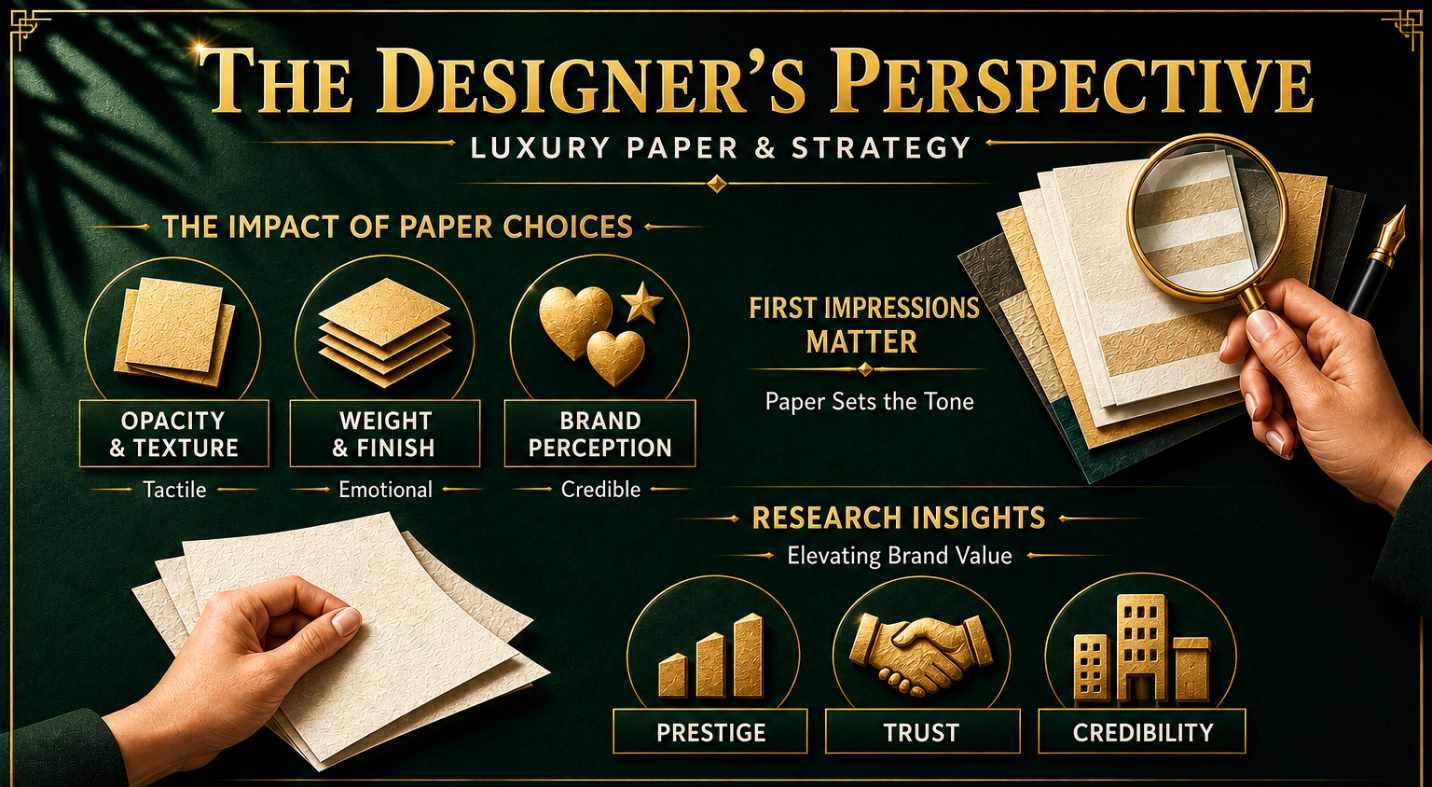 For designers, paper is a tactile extension of a brand’s identity. Beyond visual elements, technical specifications—such as opacity, grain direction, and surface coating—play a vital role in shaping how a product is experienced.
A premium, heavier-weight stock can convey authority, trust, and longevity, while specific finishes enhance the overall visual language of the design. Paper is often the first sensory interaction a user has with a brand, even before the content is read.
Research supports this: the choice of paper can significantly influence emotional response and perceived value. A high-quality substrate elevates brand perception instantly, reinforcing credibility in competitive B2B environments (Domtar, 2024).
This is where working with the right paper partner matters. At OVOL, we collaborate closely with designers to recommend substrates that not only look good on screen, but perform beautifully in print—ensuring that creative intent is fully realised.
The Printer’s Perspective: Engineering Efficiency and Consistency
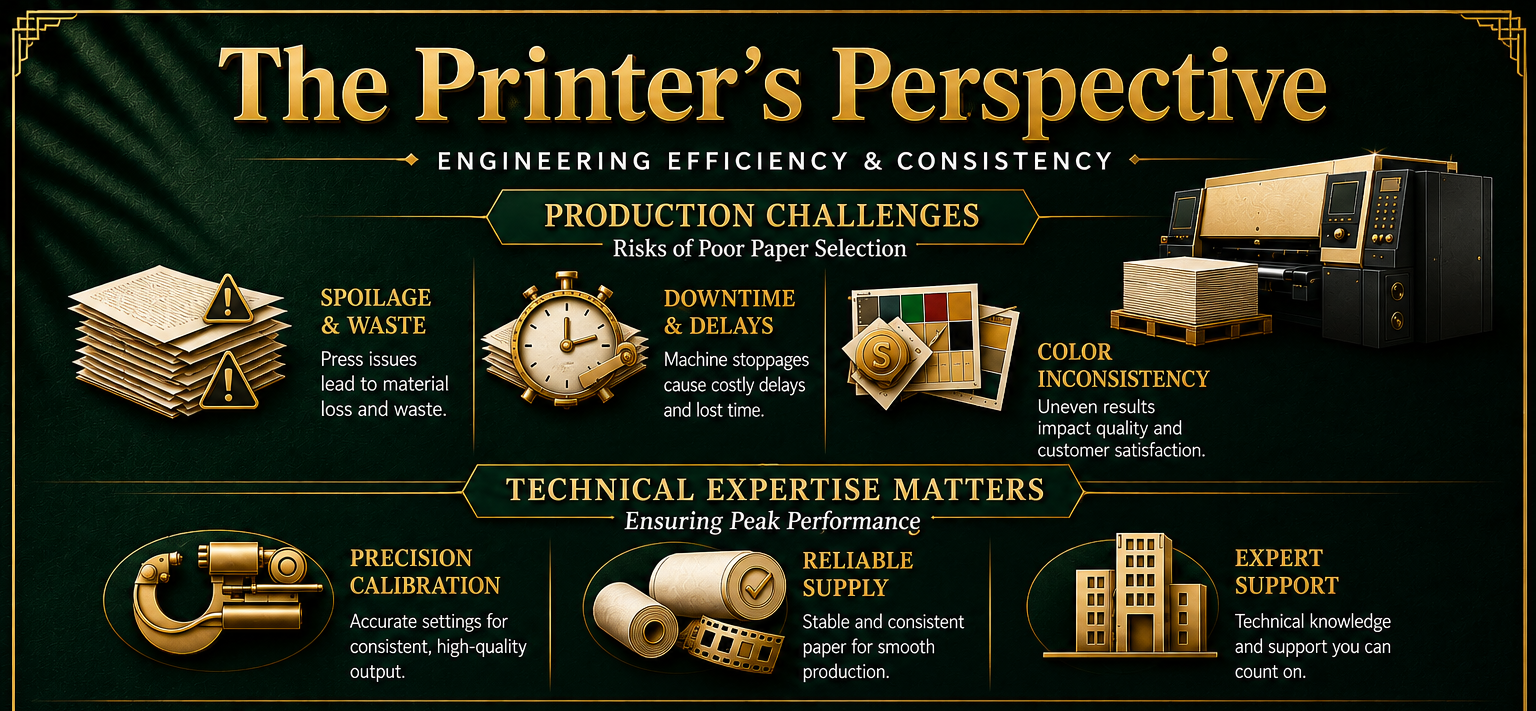 From a production standpoint, paper is a key technical variable that determines the success—or failure—of a print job.
Print equipment operates within precise parameters. Substrate characteristics such as caliper, moisture content, and surface finish directly affect press performance, ink transfer, and finishing outcomes.
Selecting an incompatible paper can lead to:
- Increased spoilage and waste
- Machine downtime and inefficiencies
- Inconsistent color reproduction
As highlighted by PrintWeek (2025), technical expertise in substrate selection is essential for maintaining production efficiency and ensuring consistent output across large-scale runs.
In a B2B context, printers are not just operators—they are technical advisors. Their role is to bridge the gap between design intent and manufacturing reality.
OVOL supports this process by ensuring consistent quality, reliable supply, and technical guidance—helping printers reduce risk, improve efficiency, and deliver jobs with confidence.
The End-User Perspective: Tangible Brand Value
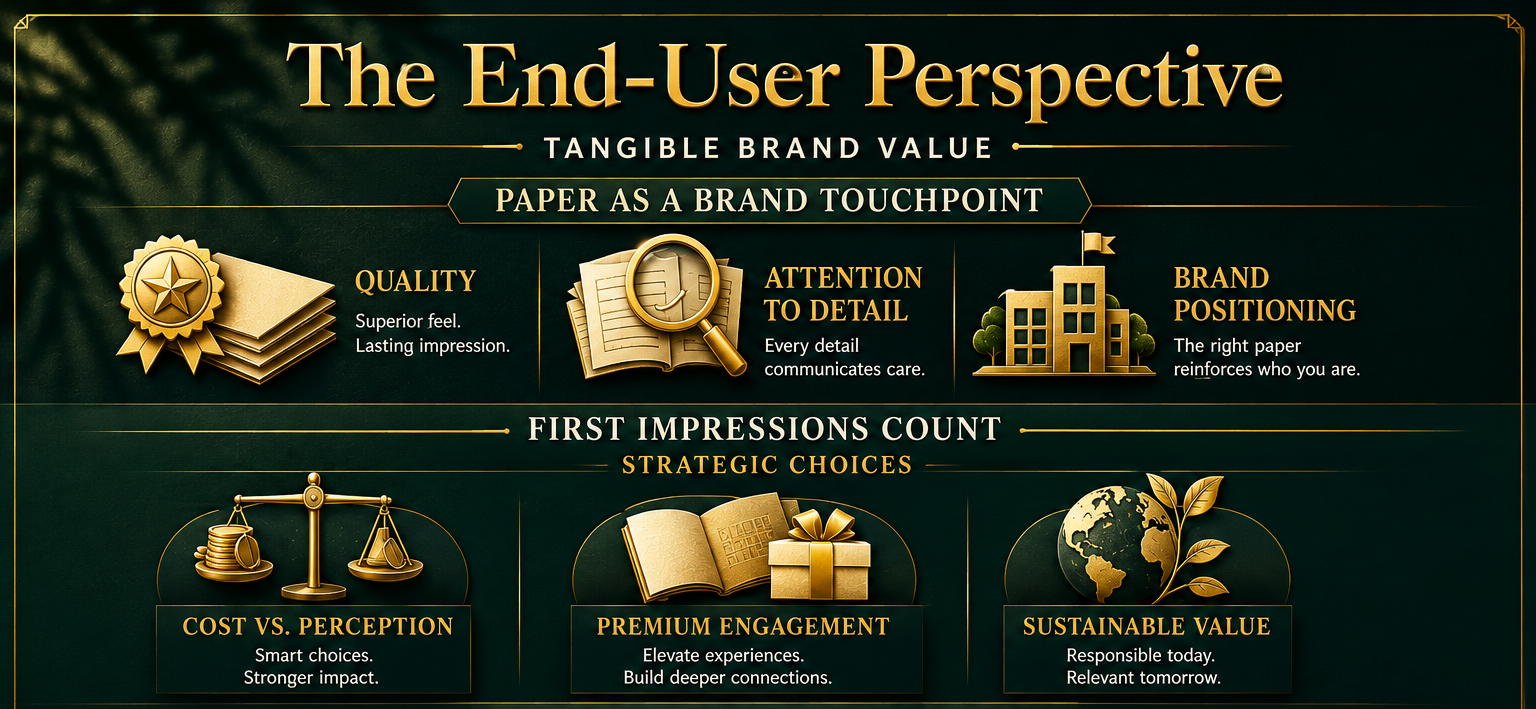 For end users, paper represents the first physical touchpoint with a brand. In B2B communications—such as corporate brochures, reports, or premium packaging—the tactile experience acts as a silent but powerful “handshake.”
The look and feel of paper communicates quality, attention to detail, and brand positioning without a single word being read.
Choosing the right substrate becomes a strategic cost-benefit decision:
- Lower-cost paper may reduce upfront expenses but risk weakening brand perception
- Premium or sustainable options can enhance engagement, trust, and long-term brand equity
In highly competitive markets, these subtle differences matter. Paper becomes a signal—intentionally or not—of where a company stands in terms of quality, professionalism, and values.
With a wide range of paper solutions—from everyday reliable stocks to premium and sustainable options—OVOL enables businesses to align their material choices with their brand and business goals.
Strategic Q&A: Substrate Selection in B2B Print
Q: How does paper selection influence budget and timeline?
A: Paper is a major cost driver. Beyond material cost, factors like weight affect shipping and postage. Standardized, high-quality stocks also improve supply reliability and reduce the risk of production delays—critical in time-sensitive B2B projects.
Q: What is the relationship between paper surface and color fidelity?
A: Substrate properties such as whiteness, smoothness, and absorbency directly influence how ink appears. Uncoated or porous stocks may mute colors, while coated papers enhance vibrancy and sharpness. Proper calibration is essential to maintain brand consistency.
Q: Is sustainability important in modern B2B print strategy?
A: Increasingly, yes. FSC-certified and post-consumer waste (PCW) papers are now key considerations for companies aligning with ESG (Environmental, Social, and Governance) goals. Sustainable choices strengthen brand reputation and meet stakeholder expectations.
Q: Why is technical compatibility critical for post-press processes?
A: Incorrect grain direction can cause cracking during folding, while certain coatings may interfere with drying or adhesion. Addressing these factors early prevents costly rework and ensures a high-quality final product.
Conclusion: Paper as a Strategic Business Decision
Paper is not just a medium—it is a business decision that influences perception, performance, and profitability.
For designers, it shapes brand experience.
For printers, it defines production efficiency.
For end users, it delivers tangible value and trust.
At OVOL, we believe the right paper does more than support print—it elevates it.
In B2B environments where every detail contributes to competitive advantage, selecting the right paper partner is just as important as selecting the right paper.
References
- (2024). The Psychology of Paper: How Tactile Marketing Influences Brand Perception.
- (2025). Technical Guides for Print Production: Managing Substrate Compatibility and Press Efficiency.
Featured Articles

June 4, 2026
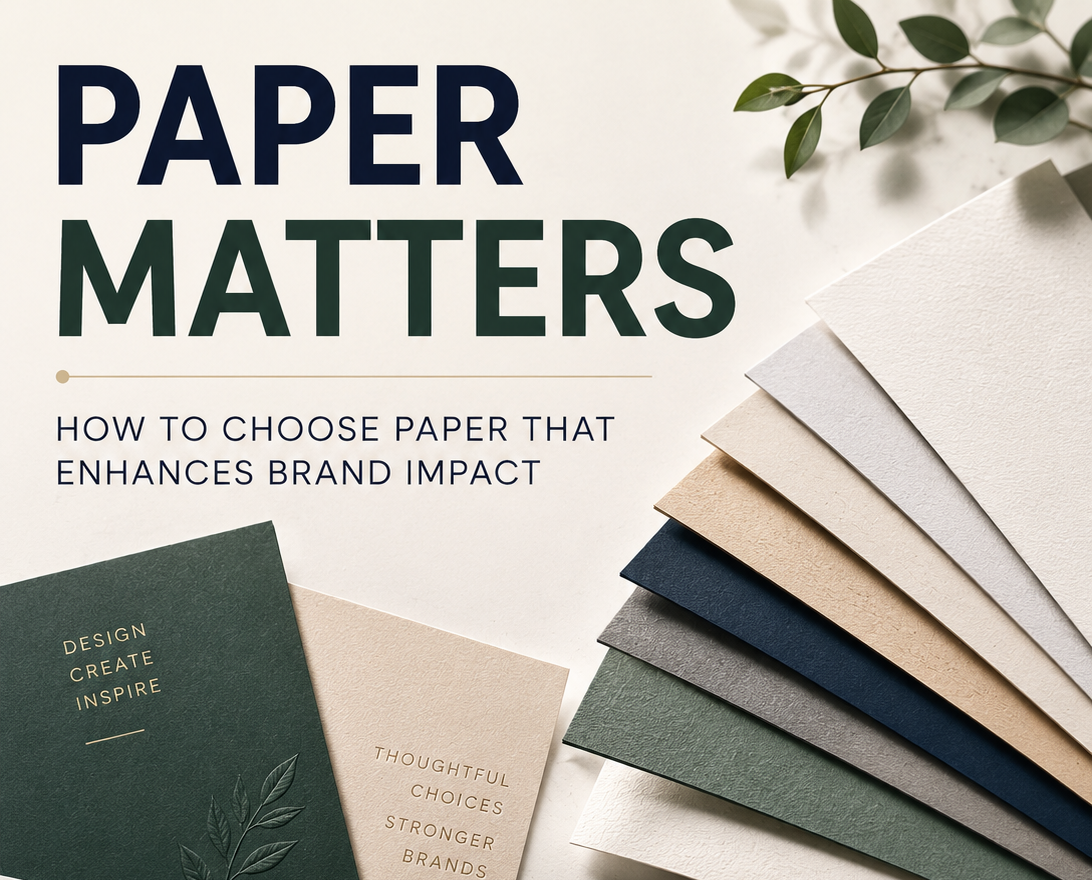
Paper Matters: A Strategic Guide to Choosing the Right Paper for Brand and Marketing Materials
Read more