

Categories
Digital Media

A Guide to Sticker Marketing for Small Businesses

Many individuals are still unaware of the effectiveness of sticker marketing. These tiny things, even those with just a simple logo as their design, can grow your business on a thousand different surfaces, travel to a thousand different locations, and be seen by a thousand different individuals. The best thing, though? It won’t break the bank.

Credit to Print Runner, here are whys and ways of how to use stickers to promote your business:

The Secret Behind the Indisputable Effectiveness of Stickers

Several studies have analysed the effectiveness of sticker campaigns and they all point out the same result: these print products successfully got the message across, whether it’s to encourage households to recycle their food waste1, remind drivers that it’s dangerous to text behind the wheel2, or reduce immunization dropout rates3.

Three Ways to Promote Your Business Using Custom Stickers

When business owners think of incorporating stickers into their marketing campaigns, the first thing that comes to mind is giving these away to customers as freebies. Although that’s undoubtedly effective, there are other ways to promote your brand using stickers.

1. Stick these in places with high foot traffic, i.e., where lots of people pass by.

Increase the chances of catching the unsuspecting eye of a potential client for your business. On the downside, placing stickers in such places can prove counter-effective when none of the passers-by belong to your target market. With that said, be smart in conducting your sticker marketing in places where there are lots of potential buyers of your products and services. For instance, if you run a bike shop, apply your stickers promoting your business at parks where lots of bikers hang out.

2. Apply stickers on moveable objects.

These aren’t just limited to placing bumper stickers on your automobiles. Garner more attention to your business by placing stickers on your belongings that you constantly bring with you like your laptop, notebook or water bottles and expand your brand’s visibility.

3. Sell stickers for personal use.

Increase your reach by adding custom stickers to your product list. Come up with designs that would complement your customers’ personal belongings such as laptops, tumblers, and phone cases. Applied on these everyday items, the stickers can be easily seen by friends and colleagues who may become compelled to find out more about your products and services. It’s better than free advertising since you actually get paid for the feature.

OVOL Singapore currently stocks DigiPrint, a collection of 15 different types of stickers available in different materials. Other than our highly popular paper stickers, we have fabric, synthetic and textured stickers which are sure to capture attention and make a lasting impression on your audience. Feel free to contact our team to find out more!


  1. https://www.sciencedirect.com/science/article/abs/pii/S0956053X16305414
  2. https://www.cureus.com/articles/4508-evaluating-the-effectiveness-of-a-front-windshield-sticker-reminder-in-reducing-texting-while-driving-in-young-adults#!/
  3. https://pubmed.ncbi.nlm.nih.gov/8505766/


Categories
Paper Supplier Singapore

5 Reasons Print Still Has A Place In The Digital Age

The advent of broadcast and digital marketing undoubtedly had an impact on print marketing, but it certainly did not replace it. The best omni-channel marketing efforts frequently feature a clever fusion of offline and online advertising. According to Top Media Advertising1, marketing campaigns that combine print and digital ads are 400% more effective!

With this in mind, let’s get to the meat of the matter: Why does print marketing matter for brands trying to stand out in the current digital era? Getharmonic.com has compiled a list of the following benefits that will help you consider incorporating what is incorrectly referred as “old school” marketing into your modern, effective marketing strategy.


  1. Memorable

This may have something to do with the fact that according to R.C. Brayshaw2, print ads require 21% less cognitive effort to process compared to digital ads. In a society that is obsessed with multi-tasking and lengthy to-do lists, our attention spans and memory skills are not the best. With constant distractions, wandering eyes and minds, it is important to create marketing that will be remembered. And it just so happens to be that print advertising results in higher levels of brand recall than digital advertising — 77% versus 46% to be exact3.


  1. Trustworthy

In the same way people seek advice from people they trust, they do business with brands they trust. When compared with the fake ads and scams that reside online, print marketing gains some major brownie points among consumers. Studies have shown 82% of people trust print ads the most when making a purchasing decision4. Additionally, 30% of consumers who notice a print ad eventually visit the website of that business5. There’s something more authentic and real about print that simply can’t be recreated in digital marketing.


  1. Strategic

Every brand puts a lot of time, thought and money into defining their target demographic. So it makes sense that where and how a business markets themselves should reach those who they have identified as potential customers. From billboards to wall graphics to direct mail, print ads can be focused on a specific age group, location, and many other relevant variables.

And thanks to things like QR codes (a great example of digital and traditional marketing working together) it’s easier than ever to track the engagement and effectiveness of a print ad. Speaking of getting people to take action, did you know that print ads generate a 20% higher motivation response than digital ads?2.


  1. Be Seen

How many times have you deleted an email without opening it? Swiped away a questionable text message? Stayed far away from a pop up ad with big letters saying CLICK HERE! Consumers don’t have the ability to put a billboard or vehicle wrap into their trash folder, which increases the odds of them noticing the ad and, even better, taking action.

In addition to being seen, print marketing gives brands the opportunity to incorporate other senses such as smell, touch and sound. The more elements you are able to strategically integrate, the better your chances are of catching — and keeping — the attention of the consumer.


  1. Cost Effective

As a business owner, putting your money to good use is a must. Everyone loves getting more bang for their buck, which is something print marketing (when properly executed) has a reputation of accomplishing. In terms of response rates, print advertising offers a 112% return on investment6. This percentage is higher than SMS, email, social media, paid search, and digital display ads.

Let’s not forget about the possibility of getting multiple views and viewers with the same print ad. Viewers will pick up on and even get irritated when receiving the same online ads multiple times. However, passers-by and drivers simply accept window decals, murals, and billboards as a part of their environment, rather than a disruption. Now that’s some attractive ROI potential right there.

As Singapore’s largest paper supplier, OVOL Singapore offers a wide range of paper material from offset to digital small format and large format printing. Beyond paper, we have rigid and flexible material suitable for your indoor and outdoor advertising requirements! Feel free to contact us here to assist you with finding the most suitable media for your marketing project!


  1. https://topmediadvertising.co.uk/top-print-advertising-statistics/
  2. https://www.rcbrayshaw.com/how-effective-is-print-and-direct-mail-marketing/
  3. https://www.newsworks.org.uk/research/rametrics/print-vs-digital-advertising/
  4. https://www.marketingsherpa.com/article/chart/channels-customers-trust-most-when-purchasing
  5. https://socalnewsgroup.com/blog/print-advertising-isnt-dead
  6. https://www.marketingcharts.com/advertising-trends/creative-and-formats-224818
Categories
Sign & Display

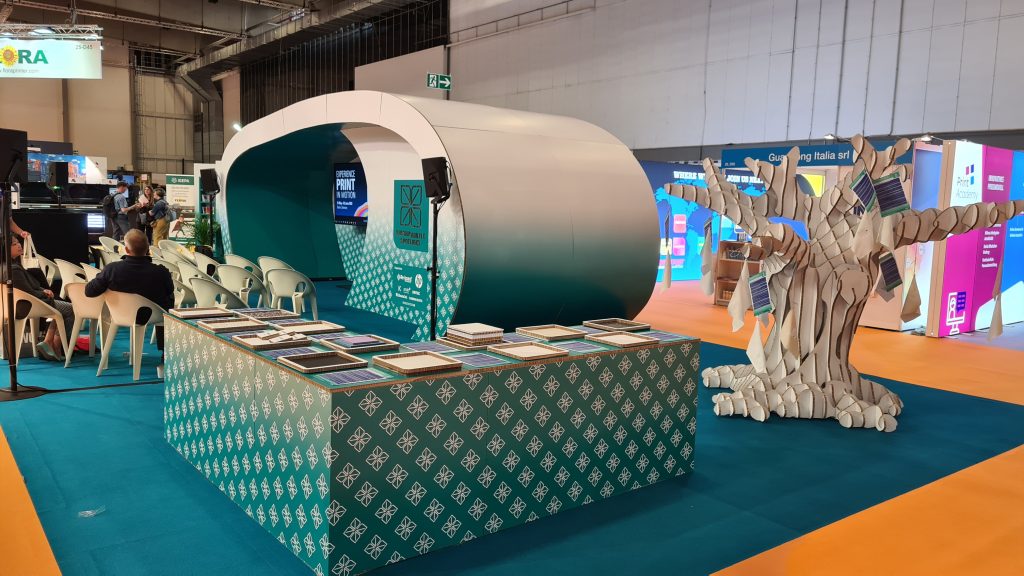
Designing an Exhibition Space & Stand: Five Tips You Should Know

Source: Re-board Technology AB

The primary purpose of any exhibition is to capture and excite audiences. It should facilitate interaction, cultivate interest and ultimately, engage key target segments. Keeping a strong vision is a challenge for any exhibition design project. The process is often long and complicated, since it involves working in close collaboration with numerous stakeholders, each with their own agendas while refining and integrating multiple creative elements.  Exhibition design is therefore not for the faint of heart, given the logistical and competitive challenges it poses. 

So, what can businesses do to navigate the process whilst ensuring that they outdo their rivals? 

  1. Tell your own unique story 

Focus on developing a storyline about your organisation or business that really articulates what your company or business values. Why do you exist?  Design experiences that will get people talking, and which encourage them to engage with the stories being told. Do not even attempt to copy rivals or what has been done before. Start from a clean slate. Develop bespoke content and fittings and decide from the very beginning what technology or displays to use to tell your story in the right tone, in the right way, at the right time to the right audience. 

  1. Keep your content concise and consistent

Don’t try to cram multiple messages and content into your exhibition space. The more you pontificate our brand’s message without taking the audiences’ unique characteristics into account, the less likely you will be able to hold their attention and to get your voice across. Simultaneously, ensure that the brand identity used for your stand or space is consistent with all the colours, logos and graphics used within your existing marketing communications. 

  1. Take your brand’s message beyond physical space 

Interactive and traditional media are invaluable tools to amplify brands while adding depth to exhibition spaces. Augmented and virtual reality technologies bring products to life, extending the time people spend in your exhibition space, and this inevitably, increases the likelihood of purchases. Modern technology also opens opportunities for both immersive and omni-channel storytelling, be it by developing a presence on the web or social media as well as apps, which in turn, expands audience reach. 

  1. Be bold and creative – but don’t try to please everyone 

The human brain is naturally drawn to vivid colours and innovative designs. Do not hesitate to deploy strong imagery, text and clever lighting to incite curiosity and interest. However, don’t try to create exhibitions that appeal to the masses. Ensure that your exhibition resonates with specific target audiences and speak to them through carefully designed and curated graphics and displays. 

  1. Create sustainable spaces 

Where possible, use eco-friendly or sustainable materials to create furniture, displays or pop-up shelves. Assess how displays can be recycled or re-configured for future exhibitions or events. Select suppliers that specialise in eco-friendly paper and board to create exhibition collateral. 

OVOL – one of Singapore’s leading suppliers for eco-friendly paper solutions – is the official distributor of Re-board, a revolutionary paper-based sandwich board. Its patented stature of corrugated board cells with several layers of special liners gives it excellent strength, giving exhibition designers the power to devise an infinite number of solid and durable 2D and 3D signage and displays. 

It boasts strong environmentally-friendly credentials, given the fact that it is largely paper-based, and is hence recyclable. Manufacturing Re-Board also uses 80% less wood. Moreover, unlike other materials that utilise hazardous solvents to piece things together, the adhesive used for Re-Board is water-based. Water-based adhesives are known to withstand extreme temperature better than adhesives created using the hot-melt method. 

Re-Board’s technology was engineered by the award-winning Swedish inventor Karl-Gustav Ericsson who saw the need for a paper-based material that was lightweight, durable, and environmentally friendly. Its strength is formidable, with Erisson himself proclaiming that it can even be used to build houses. It can be pinned together with plastic screws, and by using accessories such as hooks, hinges and corner locks, it gives exhibition designers and builders the flexibility to design and set up complex, versatile structures that are easy to deconstruct and recycle. Ovol currently sells ReBoard in two formats – 10mm and 16mm. 

Categories
San Air

Keep Cool And Keep Safe

Keeping cool in Singapore has become increasingly essential with each passing decade due to global warming and climate change. According to the National Climate Change Secretariat of Singapore, from 1980 to 2020, the annual mean temperatures rose from 26.9°C to 28.0°C1

Consequently, as temperatures have climbed, so has the demand for air conditioners. Data from Singstat highlights that almost 80% of households in Singapore owned air-conditioners in 20172, and as surmised by a National Environment Agency study conducted that very same year, this put Singapore at the top of the league in ASEAN for air conditioners per capita. These figures have ostensibly grown since then. 

NUS Professor Lee Poh Seng, who spoke to Eco-Business3 in 2018, forecast that the number of air-con installations in Singapore was expected to rise in line with the increase in the number of residential and commercial building developments, rising by 73 per cent from 2010 to 2030. 

Air conditioners have thus become ubiquitous across our island state and are now seemingly found in residences and commercial properties right across the country. 

Their popularity in Singapore has also grown not only because of sizzling temperatures, but also by the pervasive myth that air conditioners purify air. In reality, they function as a medium in circulating existing airborne bacteria & germs that are already present in enclosed spaces. As a result, they can worsen the indoor air quality especially when using units that are not well-maintained.

If the air in your home is polluted with volatile organic compounds or VOCs (gases that are emitted into the air from products or processes) and allergens, your air conditioner will only cause more harm as circulates the same stagnant air,  in poorly ventilated homes, which is poorer in quality as compared to outdoor air which is naturally circulated.

Clean Air Day commissioned UK-based National Air Quality Testing Services in 2019 to study four properties around the UK4. It made a shocking discovery. The data showed that ultrafine particle pollution is on average 3.5 times higher inside the home than outside and that it takes significantly longer than the outside to disperse. 

In a desperate bid to improve the air quality in indoor spaces at minimal costs, some individuals have resorted to using alcohol-based disinfectants to clean the filters of their air conditioning units. However, a test carried out by OVOL Singapore using an air quality measuring device from the US called Temptop found that this solution only exacerbates an already alarming situation. As the disinfectant evaporates, Formaldehyde and VOCs are released as by-products. 

Scientific research has shown that prolonged exposure to VOCs and Formaldehyde causes respiratory issues, coughs, eye irritation as well as damage to the liver, kidneys and the central nervous system5. These compounds are also carcinogenic  in nature. Children, with their less developed immune systems and the elderly, who could be Immunocompromised, are far more likely to be affected by these hazardous substances. 

So what’s the safer alternative? 

Like other products in the range, OVOL Singapore’s SAN-AIR Split System Bio-Clean Gel is formulated without harsh chemicals such as petroleum-based ingredients. Instead, it uses proprietary essential oils and other plant-based actives, making it toxic-free and 100% safe to use. When the Temptop test was repeated with the SAN-AIR split System BioClean Gel installed, no Formaldehyde or VOCs were released. In addition to combating polluting particles, the SAN-AIR Split System Bio-Clean Gel effectively kills bacteria, mould, fungus and spores. Therefore, use it to turn any air conditioner into an air purifier, ensuring that every breath is free from harmful contaminants.   

  1. https://www.nccs.gov.sg/singapores-climate-action/impact-of-climate-change-in-singapore/
  2. https://www.singstat.gov.sg/-/media/files/publications/households/hes201718.ashx
  3. https://www.eco-business.com/news/air-con-addicted-singapore-seeks-new-ways-to-escape-urban-heat-trap/
  4. https://www.globalactionplan.org.uk/news/revealed-indoor-air-pollution-3-5-times-worse-than-outdoor-air-pollution
  5. https://www.epa.gov/indoor-air-quality-iaq/volatile-organic-compounds-impact-indoor-air-quality
Categories
Digital Media

Advertise With Floor Decals And Get Your Customers’ Attention


Singaporeans spend over two hours a day scrolling through social media on their smartphones, be it at home or when they are out and about1. This means their eyes will be cast downwards for a fair part of the day. 

Floor decals are a relatively new addition to the marketers’ arsenal, effectively turning any floor space into a billboard. 

Humans are programmed to look where they are walking to make sure they won’t trip or fall. We are more likely to look at messaging below our feet than above our heads. And given that the probability of your target market having their head tilted downwards will inevitably rise as smartphone technology continues to evolve, floor advertising is poised to become one of the most cost-efficient mediums of getting your brand in potential customers’ line of vision. 

They are highly versatile, as they can be cut to any size and shape to custom fit any space from narrow corridors to busy retail stores, to large hotel lobbies and cavern-like event spaces. They can be applied to a wide range of flooring, including tiles, wood, marble, concrete and even carpet. Unlike billboards and hoardings, they don’t obstruct foot traffic. Floor stickers also cost significantly less than other out of home advertising collateral, hence making it possible to print vast quantities to be used within any given space. To ensure lasting durability and functionality, top quality floor decals are coated in a slip-resistant vinyl which prevents accidents. In addition, they are easy to apply, and are just as easy to remove, causing no damage to surfaces. Besides acting as a marketing aide, floor decals can also be harnessed as a wayfinding tool to guide people around a space.  

Due to its novelty, floor decals rarely fail to get noticed. However, there are some tactics you could adopt to maximise their impact: 

  • Size and location is everything. Place your floor decals in areas of high footfall but ensure that they are large enough to be seen, especially if the area is wide and open. 
  • Use bright colours. Ramp up the colour intensity of your floor graphics. Red, yellow and neon tones are suitable eye-catching shades to use on floor decals. 
  • Be playful. Using humour or adopting a whimsical theme ensures that your message will stand out in consumers’ minds. 

Advances in print and ink technology now allow floor graphics to be printed in dramatic colours, and to integrate lifelike images. It is also possible to take high-resolution images and convert them into full-colour floor advertising. The 2D nature of floor stickers does not limit your ability to utilise it to create 3D graphics. Making clever use of perspective, a floor decal can appear as if it were popping out from surfaces which can even be seen from a distance.  

OVOL’s DigiTuff Bureki, a water-resistant, floor sticker, is R102 certified slip-resistance, which meets BCA minimum pendulum and ramp recommendation for specific locations. It is also tear resistant and will withstand anything from pallet trucks to stiletto heels. Once applied, it will not stretch or become distorted. It uses a special adhesive, making it easy to apply and reposition. Last but not least, DigiTuff Bureki has been specially designed for digital dry-toner printers and requires no lamination.

Reference: 

1. https://techwireasia.com/2022/02/87-of-singaporeans-spend-over-two-hours-a-day-on-social-media-apps/

2. https://www.bca.gov.sg/Publications/EnhancementSeries/others/AggStone_c2.pdf

Categories
Sign & Display

The Power of Out of Home Advertising and Vehicle Wrapping

Don’t underestimate the power of Out of home advertising (OOH) in keeping your brand top of mind.  

Moving Walls, an advertising technology company conducted a joint study conducted with Adcity in Singapore at the start of the pandemic. Using a patented multi-sensor measurement system, the company uncovered that people were moving more frequently across locations close to their home, essentially increasing the number of times OOH advertising was seen. OOH therefore continued to deliver views despite the blanket lockdowns and as Coronavirus raged, and all but essential travel was curbed. This medium was still actively influencing the path to purchase, unlike other advertising which chose to go silent during the early dark days of the pandemic. 

An Out of Home Industry collaboration polling results from 65 global campaigns that occurred between March and September 2020, uncovered that advertisers who continued to invest in OOH benefited from strong returns1. The robust study affirmed that OOH advertising was not only seen or recalled, but that they actually spurred consumers into action. 

The results were extremely impressive: 

  • +51% increase in top of mind awareness
  • +51% increase in Ad recall
  • +3% increase in consideration
  • +16% increase in purchase intent

Here in Singapore, Coronavirus restrictions are just starting to be peeled back, and a sense of normalcy is starting to creep in. Traffic on the roads and streets is recovering, and crowds are once again gathering within the Central Business District. MRT trains are now operating at around 70% of their pre-pandemic capacity, making it an opportune time to start thinking about deploying OOH solutions once again. 

But which OOH format should small and medium enterprises leverage to carry their brand message? 

For the uninitiated, OOH currently comes in four formats – billboards, street furniture, transit and place-based. Transit is deemed to be the most influential, and the most effective for advertising recall. Indeed, market research giant Nielsen uncovered in its 2019 OOH Advertising Report2 that wrapped vehicles are the most noticed segment of Transitory OOH inventory. 

Furthermore, when compared to traditional advertising mediums such as radio, TV and print, car wraps on moving vehicles are much lower in cost and give better returns. In the United States, popular marketing channels — such as online advertising — can cost up to US$17.50 per 1,000 impressions and; magazines can cost up to US$21.00. In comparison, OOH reaches the equivalent number of consumers at a low cost of roughly US $3.38 – US$8.653, depending on the format.

Besides generating high returns on investment, there are other fundamental reasons why vehicle wraps are much more effective than other advertising mediums. For instance, vehicle wraps cannot be ignored, blocked, bypassed or thrown away. Most of the advertising we are exposed to every single day is often overlooked, but vehicle wraps are often in our direct line of vision when come across one. Vehicle wrapping therefore cultivates long term brand awareness, and they can be customised and fine tuned to appeal to specific demographics and localities. 

Naturally, for vehicle wrappings to stand out, they need to showcase vivid colours, memorable icons and stunning graphics. OVOL’s 3M Envision Print Wrap Film is an extremely durable and versatile phalate-free film that’s also easy to install and remove. This makes it the ideal solution to turn any vehicle into a formidable mobile advertising tool.

  1. https://posterscope.com/content/out-of-home-industry-collaboration-proves-positive-outcomes-for-advertisers-during-restrictions/
  2. https://movia.media/moving-billboard-blog/successful-brands-allocate-13-of-ad-budget-to-ooh-warc/
  3. chrome-extension://oemmndcbldboiebfnladdacbdfmadadm/https://oaaa.org/Portals/0/SalesApp/Docs/Nielsen%20OAAA%20OOH%20Advertising%20Study%202019%20FINAL(2).pdf?ver=2020-03-11-142521-443
Categories
Green Paper

FSC® CERTIFIED PAPER VS RECYCLED PAPER – What’s the difference?

Recycling symbol made of paper

What exactly is  Forest Stewardship Council (FSC®) certified paper? Why should we use it for your

Printing needs?

Let’s cut through all the jargon and give you the answers to the pressing questions you might have.

Q. What is Forest Steward Council (FSC®) certified paper?

In a nutshell, FSC® is a global certification system that confirms the paper is derived from a responsible source.

FSC® mission is to promote environmentally appropriate, socially beneficial, and economically viable management of the world’s forests. FSC® is a leading catalyst and defining force for improved forest management and market transformation, shifting the global forest trend towards conservation, restoration, and respect for all.(https://fsc.org/en/about-us).

FSC® chain of custody certification provides a credible assurance that products which are sold with an FSC® claim originate from well-managed forests, controlled sources, or reclaimed materials. (https://fsc.org/en/chain-of-custody-certification)

Q. Isn’t FSC® paper just another type of recycled paper?

Recycled paper might not contain a very high level of old paper – some of its content might be virgin pulp – that may not have been harvested in an ecologically sound manner.

 Hence, when you see paper labeled as FSC® Recycled, you can rest assured that it has been verified as being made from recycled content (a minimum of 70 percent post-consumer (PCW) waste (with the balance being pre-consumer waste) are eligible to use the new FSC “Recycled” label.a). (https://fsc.org/en/fsc-labels)

Q. So how do we know if a paper supplier is FSC® Certified?

All products and packaging sold by manufacturers or suppliers that adhere to the standards

and policies of the FSC® are granted chain of custody certificates and the ability to use

FSC® labels. 

There are three FSC® labels: (https://fsc.org/en/fsc-labels)

FSC 100%

All the materials used in products bearing this label are sourced from forests that have been audited by an independent third party to confirm they are certified according to FSC’s COC or FSC FM standards. Of all the FSC labels.

FSC RECYCLED

Products that bear this label have been verified as being made from recycled content (a minimum of 70 percent post consumer (PCW) waste (with the balance being pre-consumer waste) are eligible to use the new FSC “Recycled” label.). The use of FSC Recycled products can help to alleviate the pressure of demand on sources of virgin material, thereby helping to protect the world’s forests.

FSC MIX 

FSC MIX Labels are made of materials from well-managed FSC®-certified forests, recycled materials, and other controlled sources.

It has been projected that paper consumption will increase by 16% over the next decade to hit 461 million metric tons in 2030(1). Demand for paper will therefore continue to outstrip supply despite the shift to digitise the economy.

By using FSC® certified paper products, you and your business can show your commitment by reducing the impact to the environment , which has become more important to consumers in recent years. The Institute of Policy Studies revealed in February 2021 that Singaporeans have become more environmentally conscious. Three-fifths of those surveyed felt that protecting the environment should be prioritised even if it results in slower economic growth and some job losses. This was a jump from 43% in 2012(2).

Therefore, there has been an unprecedented push for companies to showcase their corporate social responsibility credentials. By adopting paper products with the FSC® logo will certainly reflect well on your brand, helping them to improve their corporate image. Using environmentally friendly paper, as supplied by OVOL is one easy way to ensure that you are also acting responsibly and ethically, and are ultimately contributing to the fight against global deforestation.

OVOL Singapore is FSC® certified (License Code FSC C015534)

1. https://www.statista.com/statistics/1089078/demand-paper-globally-until-2030/ 

2. https://lkyspp.nus.edu.sg/ips/news/details/our-singaporean-values-key-findings-from-the-world-values-survey


Categories
Digital Media

Designing the Perfect Label: Tips & Tricks

When it comes to designing labels, it is about creating something that’s not only functional, but which enables your product to stand out on the shelf. 

It must transmit a brand’s values, arouse interest and ultimately, help a product gain traction in a crowded marketplace.

That’s a pretty long list to tick off. 

So, what makes for good label design? 

Whether you’re an entrepreneur looking to save money by designing labels by yourself, or a fully-fledged designer, here are some useful tips: 

Tip #1 Always design in CMYK

The bulk of commercial print presses in use today use a four-colour process known as CMYK. Each of these letters correspond to a specific colour – cyan, magenta, yellow and black. These four colours meld in different ways to create a spectrum of shades. However, most design applications are set to RGB colour mode by default. Hence, you need to ensure that the software you use is set up using CMYK before you even start designing your labels. 

 Tip #2 Add a bleed area of around 2 millimetres 

It is always good practice to always add a bleed area – an extra background colour that extends beyond the trim area of your print – when designing labels. This is done to ensure that there are no visible white borders when the printing process is complete, and the label is die-cut along the “trim” line. 

Tip #3 Make sure the logo/branding is prominent 

This is an obvious one, but it can be easily missed. To ensure that your logo stands out and communicates precisely what your brand stands for, avoid using gradients/effects as these often don’t show well in print. Pick clear, clean fonts – keep away from squiggles. And finally, make sure your logo is placed front and centre and is the very first thing customers see. 

Tip #4 Keep your designs clean and simple 

You don’t have to be a user experience expert to understand the significance of dead weight, where the eye is drawn to information or images that do not result in sales. To minimise this issue on your product’s label, it is highly crucial to avoid packing too much into your design. Avoid using multiple fonts, long reams of text and various images in one label. A busy label will only cause confusion, increasing the risk of your product being rejected. The product and brand name should take centerstage, while other text and graphics should be kept to the bare minimum as much as possible. 

Tip #5 Use high quality images 

Image quality is something that should never be compromised when designing a label. In fact, it is the one distinguishing factor that can make or break your product and brand. For instance, you might have an eye-catching logo, a standout colour scheme and a memorable tagline, but if the images are low in quality, your product will be dismissed by customers in mere seconds. As a rule of thumb, do not source images from the Internet. No JPEGs as and no low-resolution PNGs as they don’t print well. Instead, opt for images with a minimum of 300DPI sourced from professional stock image galleries such as Getty Images or Shutterstock and use vector images where you can. 

Tip #6 Pick the right paper to print your labels Paper for printing labels can be made from different materials, each with their own qualities and characteristics.  Paper labels have good ink adhesion and they can be customised to produce the vintage look that’s in fashion today. Fabric labels on the other hand, have a handmade personal feel to them. However, for the best professional finish that suits a variety of products, synthetic paper made from polyester or polyethylene is highly recommended. These are extremely durable and waterproof, making them ideal for numerous applications. They are the perfect solution for creating professional labels. OVOL Singapore currently stocks DigiPrint, a collection of 15 different types of Digital Stickers available in different materials including paper, fabric and synthetic as well as formats, making it easier for graphic designs, artwork or products to stand out.

Categories
Green Paper

Boost Your Sustainability Credentials with FSC® Certified Paper

Sustainability is becoming more important for all companies, across all sectors in Singapore and around the world. 

HSBC’s 2019 Navigator survey (https://www.business.hsbc.com.sg › campaigns) revealed that amongst Singapore firms, 88% agree that sustainable practices will enhance growth and profitability. 

Sustainability was thrust into the limelight once again as countries pushed their zero-carbon agenda amid scientific evidence that climate change contributes to pandemics1. So, addressing climate change now would help humans to become more resilient in the future. We are therefore at a crucial turning point in human history, and over the next decade, governments, organisations and society must ramp up their actions to tackle the climate crisis. 

A study carried out in March 2021 by Accenture in partnership with the Worldwide Fund for Nature (https://wwfasia.awsassets.panda.org/downloads/sustainability_in_singapore_wwf_accenture.pdf) found that Singapore’s state of sustainability is a prime concern for consumers, with 80% stating they care for the environment. A third (32%) claimed that they would make most purchasing decisions based on their product sustainability and environmental impact. A further third (35%) said they would be willing to pay a premium for up to 10% for sustainable alternatives. Evidently, COVID-19 has accelerated consumers’ consciousness of sustainability, and businesses who are at the forefront of this shift stand to reap immense benefits. 

Companies who adopt sustainability policies do not just help the environment – sustainability initiatives can lead to an improved brand image, happier shareholders, reduced overheads as well as increases in productivity. 

How can businesses ensure that they are consuming paper in a responsible manner?

One of the viable solutions is to use paper from Responsible Forestry. That is, using paper that is Forest Stewardship Council (FSC®) certified. Forest Stewardship Council (FSC®) uses a system of inspecting and tracking timber and pulp across the supply chain. This means that trees are grown for commercial purposes which also helps provide a means of livelihood for millions (3) but it is well managed, with trees being replanted with minimal disruption to local communities. Today, over 200 million hectares of forest are managed to FSC® standards around the world.  Businesses that adopt FSC® papers are, hence making an eco-friendlier choice. 

OVOL Singapore pioneered the introduction of paper made from pulp sourced from sustainably managed forests. It holds the accolade of being the first paper supplier in Singapore to receive FSC® certification and is dedicated to ensuring that its clients extend their sustainable practices to their printed materials. OVOL currently procures a comprehensive line of FSC®-certified papers across various grades and finishes including papers that have up to 100% recycled content. These are suitable for use in all your printing and visual communication needs – be it for annual reports, brochures, flyers, leaflets, magazines, packaging, mailers and cards. Its most popular offering is Green Forest Offset , an uncoated FSC® certified paper that allows you to reflect your commitment to the environment without compromising on quality, clarity and affordability.

  1. Xavier Rodó, Adrià San-José, Karin Kirchgatter & Leonardo López, Changing Climate and the COVID-19 pandemic: more than just heads or tails 
  2. https://www.statista.com/statistics/1089078/demand-paper-globally-until-2030/ 
  3. https://www.cifor.org/Publications/Corporate/FactSheet/livelihood.htm  
  4. https://www.business.hshbc.com.sg 
  5. https://wwfasia.awassets.panda.org/downloads/sustainability_in_singapore_wwf_accenture.pdf